Ever wondered what actually happens before a corrugated box lands on your doorstep or gets used to ship your online orders? At Annjai Packaging, we manufacture packaging materials daily out of our Ballabgarh facility, and in this post, we’re pulling back the curtain on how corrugated packaging is actually made — from raw paper to the finished box, mailer, or courier bag you end up using.
Step 1: It Starts with Kraft Paper
Corrugated packaging begins as large rolls of kraft paper — a strong, brown paper made from wood pulp. Depending on the strength required, manufacturers use different GSM (grams per square meter) grades: lighter paper for standard boxes, heavier paper for boxes that need to carry more weight.
Step 2: Fluting — The Secret to Corrugated Strength
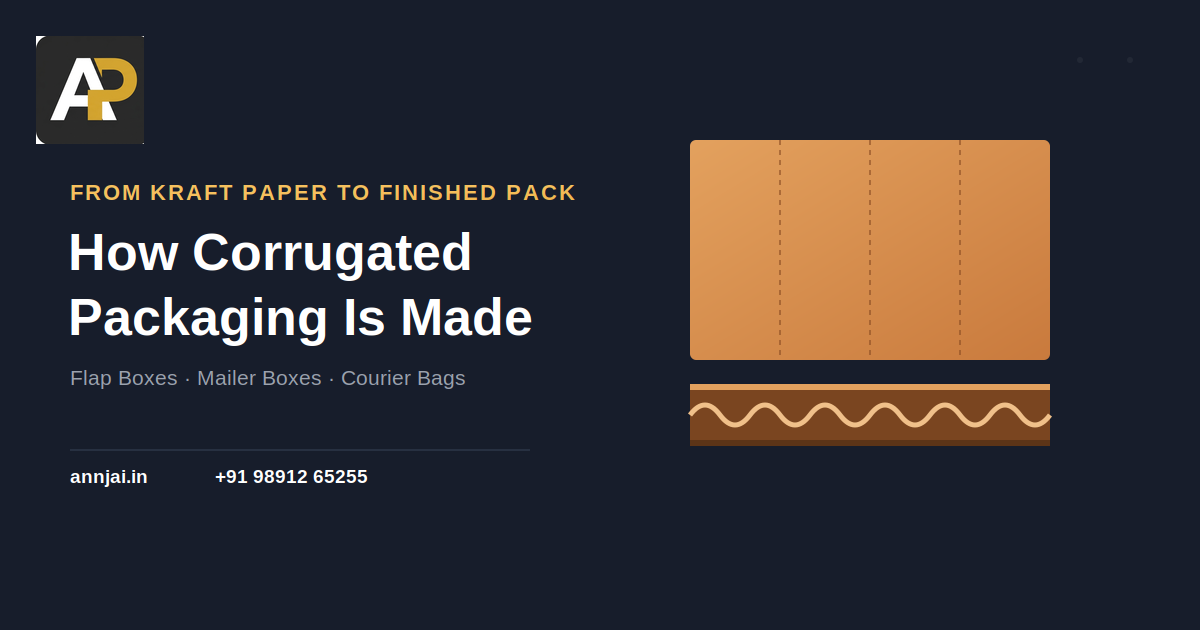
This is where “corrugated” gets its name. A fluting machine passes the kraft paper through heated corrugated rollers, pressing it into a wavy, ridged pattern. This wavy layer (called the “flute”) is what gives corrugated board its strength and cushioning — it acts like a spring, absorbing shock and distributing weight evenly.
The fluted paper is then glued between one or two flat sheets of linerboard, creating what’s called single-face, single-wall, double-wall, or triple-wall board, depending on how many fluted and flat layers are combined. More layers mean more strength, but also more weight and cost — so choosing the right combination matters depending on what’s being packed.
Step 3: Sheet Cutting
Once the corrugated board comes off the production line in large continuous sheets, it’s cut down into flat sheets of the required size. These flat sheets are the raw material for everything that comes next — whether that’s a box, a mailer, or simple wrapping material.
If you just need flat corrugated material for wrapping, cushioning, or your own custom fabrication, browse our corrugated sheets range — supplied in bulk across Faridabad and NCR.
Step 4: Printing (If Required)
For branded packaging, this is where the box gets its logo, design, or instructional text — usually done via flexographic printing, which uses flexible printing plates and fast-drying ink suited for corrugated surfaces.
Step 5: Die-Cutting & Slotting
A die-cutting machine cuts the flat sheet into the exact shape needed — creating the flaps, slots, and fold lines specific to the box style being made. This is where the manufacturing process branches out into different product types:
Flap Boxes (Regular Slotted Containers)
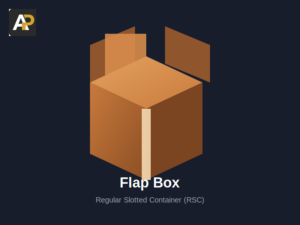
The most common corrugated box style — four flaps on top, four on the bottom, folding inward to close. The die-cutting stage cuts these flaps to precise dimensions, and score lines are pressed in (not cut) so the board folds cleanly at the corners without cracking.
Mailer Boxes
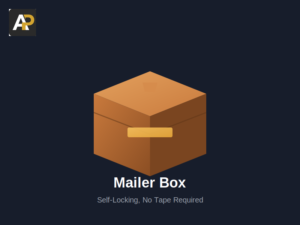
Unlike flap boxes, mailer boxes are designed with self-locking tabs built into the die-cut pattern — no tape required to close them. The lid and base often fold from a single sheet, making them faster to assemble and popular for D2C brands that want a clean unboxing experience without visible tape.
Courier Bags
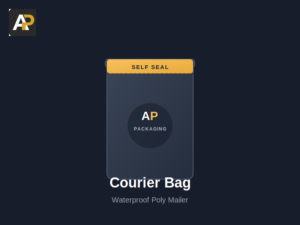
For lightweight items that don’t need a rigid box, courier bags (poly mailers) follow a different manufacturing process entirely — made from polyethylene film rather than corrugated board, heat-sealed on three sides with a self-adhesive strip on the fourth for sealing. These are built to be waterproof and tamper-evident, which is why they’re widely used for Amazon, Flipkart, Meesho, and Myntra shipments.
Step 6: Folding & Gluing
For flap boxes and mailer boxes, the die-cut sheet is folded along the score lines and glued or stitched at the manufacturing joint (the one seam that holds the box’s shape before it’s used). The box is then shipped flat — this is why corrugated boxes are so space-efficient to store and transport before use.
Step 7: Quality Check & Dispatch
Before dispatch, boxes are checked for consistent fold lines, proper glue adhesion, and correct dimensions. Even a small folding defect can weaken a box’s load-bearing capacity, so this step matters more than it might seem.
Why This Matters When You’re Buying Packaging
Understanding this process helps explain why packaging pricing varies so much — wall count (single/double/triple), GSM, box style, and printing requirements all affect both material cost and manufacturing time. It’s also why custom sizes sometimes take longer to fulfill than standard ones — the die-cutting tooling may need adjustment for a size that isn’t already in production.
Get the Right Packaging for Your Business
Whether you need standard or custom-sized corrugated boxes for shipping and storage, tamper-proof poly mailers for e-commerce orders, or bulk corrugated sheets for your own packing needs, Annjai Packaging manufactures and supplies across Faridabad, Ballabgarh, and Delhi NCR — with bulk pricing and reliable local delivery.
📞 +91 98912 65255 🌐 www.annjai.in 📍 Plot No-97, Laghu Udyog Kunj, Sector 64, Ballabgarh, Faridabad, Haryana 121004
Annjai Packaging — Packed with Care, Delivered with Trust.